
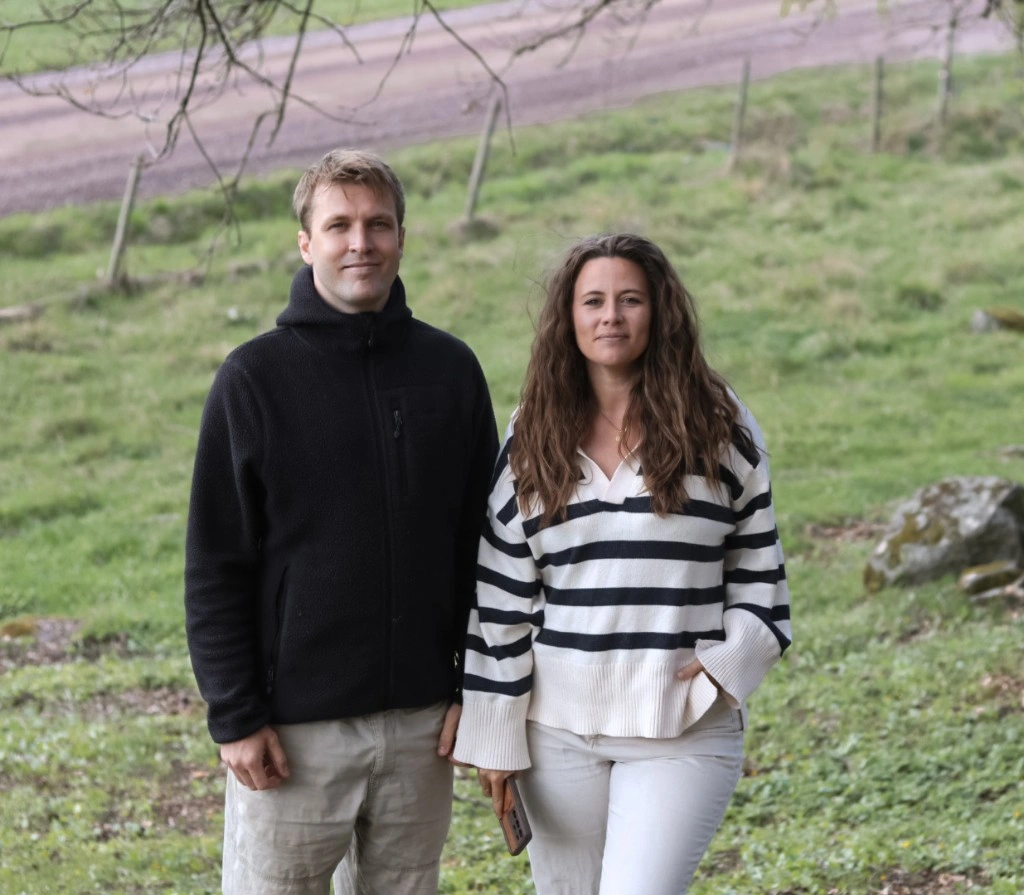
Three years ago, entrepreneurs Hanna Ajaxon and her husband Victor Ajaxon took an unexpected step into the forestry and hunting industry. Although they were not hunters themselves, they laid the foundations for the company Viltförvaltning, which focuses on combining new technology with better decision-making for landowners.
The idea started to take shape through Hanna’swork as a marketing consultant, where she used drones in her work. At the same time, a crucial question came from relatives with forests: would it be possible to use drones together with thermal imaging to scan forests and detect wildlife?
That question was the starting point.
– We started exploring whether it was possible to combine the technologies, and pretty soon we were sitting on large amounts of data,” says Hanna.
Using drones equipped with thermal imaging cameras, they started collecting material, which was then used to develop an AI model that can identify different animal species.
Mapping the movements of wildlife
The technology is based on scanning forest areas with thermal imaging cameras via drones. The material is then analyzed using AI, which can determine which animals are present in the area and how they move.
The result will be a more detailed basis for landowners, forest owners and hunters. Through a digital platform, users can access the information and gain a better understanding of their land.
– “You get a clearer picture of what is actually in the forest,” says Hanna. “This can be valuable both in management and before a land purchase, for example.
In addition to the actual mapping, the company also works to develop recommendations based on research. These may include measures to manage specific species or adaptations in forestry.
Contributes to increased road safety
Another area of use is the collaboration with Länsförsäkringar, where the focus is on reducing wildlife accidents in traffic. By identifying wildlife routes – where animals move and cross roads – it is possible to point out risk areas.
– We can see patterns in how the animals move and use this as a basis for preventive work,” says Hanna.
A holistic approach to land
One difference compared to many other actors is that Wildlife Management scans entire land areas, rather than working with single measuring points. This gives a more coherent picture of the ecosystem.
The ambition going forward is to further develop the platform into a more comprehensive tool.
– We want it to be a place where you can see data, record observations and get support in making decisions,” says Hanna.
From local missions to broader interest
The first assignments came through contacts in the Kinda and Kisa areas, following requests from relatives. Since then, the business has gradually reached more customers, largely thanks to early media attention.
– There was quite a lot of interest right away, which has been great fun,” says Hanna.
The company first came into contact with the Nyföretagarcentrum, where they were named “New Entrepreneur of the Year 2025”. Then the journey continued via Almi, which introduced Viltförvaltning to LEAD.
Today, the company is in a development phase, where both technology and offer continue to take shape.
– There’s a lot going on, and it’s exciting to see how this can develop further,” says Hanna.